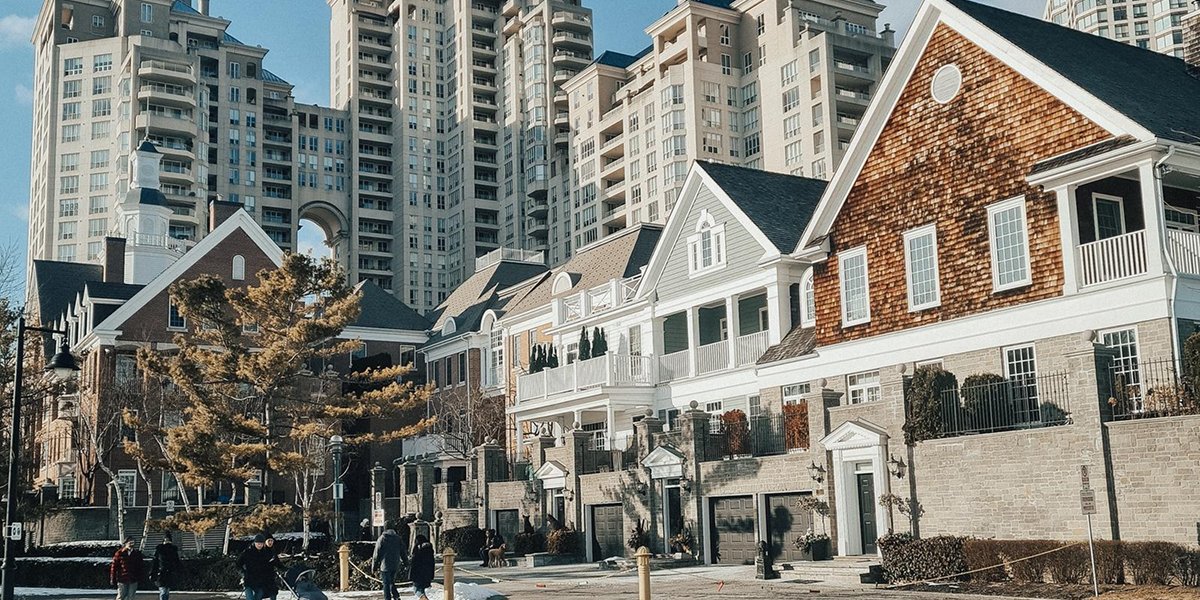
Dreaming of owning a million-dollar home in the Greater Toronto Area? You’re not alone. With the average home price in the GTA hovering around this mark, understanding what it takes to qualify for this purchase is crucial for any serious homebuyer.
Let’s break down exactly what income you’ll need, what your monthly payments will look like, and the key differences between insured and uninsured mortgages.
The Basic Numbers: What Does a $1 Million Home Really Cost?
When looking at a $1,000,000 home purchase, your financial requirements depend heavily on how much you’re putting down as a deposit.
Minimum Down Payment (Less Than 20%)
Minimum Down Payment (Less Than 20%)
- Minimum down payment: $75,000
- Annual household income required: $198,000
- Monthly mortgage payment: $4,474.83
This scenario requires mortgage default insurance since your down payment is below 20%.
Standard Down Payment (20%)
With a full 20% down payment, the numbers shift:
- Down payment: $200,000
- Annual household income required: $144,000
- Monthly mortgage payment: $3,804.15
This is considered a conventional mortgage and doesn’t require mortgage insurance.
Insured vs. Uninsured Mortgages: Understanding the Difference
One of the biggest factors affecting your qualification is whether your mortgage is insured or uninsured.
Insured Mortgages (Less Than 20% Down)
When you put down less than 20%, your mortgage must be insured through CMHC, Sagen, or Canada Guaranty. Here’s what you need to know:
- Current rates: Approximately 3.8% with our lending partners
- Higher income requirement: You need $198,000 annually
- Insurance premium: Added to your mortgage amount (typically 2.8% to 4% of the loan)
- Lower interest rate: Since the lender’s risk is reduced
Uninsured Mortgages (20% Down or More)
With a 20% or larger down payment, you avoid insurance requirements:
- Current rates: Approximately 4.0% with our lending partners
- Lower income requirement: You need $144,000 annually
- No insurance premium: Saving you thousands upfront
- Slightly higher rate: About 0.2% more than insured rates
Breaking Down the Income Requirements
Why such a big difference in income requirements? It comes down to how lenders calculate affordability.
For the insured mortgage scenario:
- Your $925,000 loan at 3.8% creates a $4,474.83 monthly payment
- Lenders typically use a Gross Debt Service (GDS) ratio of around 39%
- This means your housing costs shouldn’t exceed 39% of your gross monthly income
$4,474.83 ÷ 0.39 = $11,473 monthly income needed - Annual requirement: approximately $137,676, but stress test rules bump this to $198,000
For the uninsured mortgage scenario:
- Your $800,000 loan at 4.0% creates a $3,804.15 monthly payment
- Lower loan amount and payment reduce the income needed
- After stress testing: approximately $144,000 annually required
Don't Forget About Closing Costs
Many first-time buyers focus solely on the down payment and forget about closing costs. These additional expenses typically range from 1.5% to 4% of the purchase price.
For a $1 million home, expect to pay:
- Land Transfer Tax: Approximately $16,475 (Ontario)
- Toronto Land Transfer Tax: Additional $16,475 (if buying in Toronto)
- Legal Fees: $1,500 to $3,000
- Home Inspection: $500 to $800
- Title Insurance: $300 to $500
- Property Survey (if required): $1,000 to $2,000
- Appraisal Fee: $300 to $500
- Development Charges and Levies: $2,000 to $10,000 (for new home purchases only)
Total estimated closing costs: $22,000 to $50,000 depending on location, property type, and specific requirements.
First-time homebuyers in Ontario can claim a rebate of up to $4,000 on the provincial land transfer tax, which helps offset some of these cost
Why Development Charges Matter for New Homes
If you’re purchasing a newly built home or a property in a newly developed area, development charges and other municipal levies can add significant costs to your closing. These fees are typically charged by municipalities to cover the cost of infrastructure and services for new developments.
Development charges can include:
- Municipal development charges
- Park levies
- Education development charges
- Regional infrastructure fees
- Community benefit charges
These charges typically range from $2,000 to $10,000, but can sometimes be higher depending on the municipality and the size of the property. This is why having a lawyer review your purchase agreement is absolutely critical. Your real estate lawyer will identify all potential fees and levies, ensuring you’re fully protected and aware of every cost before you commit.
Important note: If you’re buying a resale home (not newly built), you typically won’t face development charges, though other closing costs will still apply.
The Importance of Legal Review
Never skip the legal review of your purchase agreement. A qualified real estate lawyer will:
- Identify all development charges and levies (especially for new construction)
- Review title and ensure there are no liens or encumbrances
- Explain all clauses and conditions in plain language
- Protect you from hidden costs or unfavorable terms
- Ensure your deposit is properly held in trust
- Flag any red flags in the agreement that could cost you later
- Review builder warranties and completion dates for new homes
- Verify all inclusions and finishes match what was promised
The $1,500 to $3,000 you spend on legal fees is money well spent for the protection and peace of mind you receive. For new construction purchases especially, this legal oversight is essential to protect your interests.
Please note, at PBC Toronto, all home buyers receive a free legal review when working with us on shopping for a new home.
Current Market Rates: What We're Seeing
Interest rates play a massive role in affordability. As of January 2026, we’re seeing competitive rates from our lending partners:
- Insured mortgages: 3.8%
- Uninsured mortgages: 4.0%
While these rates are subject to change based on Bank of Canada policy and lender competition, they represent some of the most competitive options available in today’s market.
Example Scenarios: Real People, Real Numbers
Scenario 1: The Dual-Income Professionals (New Construction)
Sarah and James are both professionals earning $100,000 each annually ($200,000 combined). They have $80,000 saved for a down payment and are purchasing a new build in Vaughan.
- They can put down 8% ($80,000)
- Their mortgage will be insured at 3.8%
- Monthly payment: $4,474.83
- They comfortably meet the $198,000 income requirement
- They need an additional $30,000-$45,000 for closing costs
- Their lawyer reviews the agreement and discovers $8,000 in development charges they hadn’t budgeted for
- Total cash needed: $118,000
Scenario 2: The Established Homeowner (Resale Property)
Maria is upgrading from her condo and has $200,000 in equity to use as a down payment. She earns $150,000 annually and is purchasing a resale home in Mississauga.
- She can put down 20% ($200,000)
- Her mortgage will be uninsured at 4.0%
- Monthly payment: $3,804.15
- She exceeds the $144,000 income requirement
- She needs $20,000-$40,000 for closing costs (no development charges for resale)
- Her lawyer identifies all fees upfront, preventing any surprises at closing
- Total cash needed: $220,000-$240,000
Additional Qualification Factors
Income and down payment aren’t the only factors lenders consider:
Credit Score
- Minimum 600 for insured mortgages
- Ideally 680+ for best rates and approval odds
- 700+ for uninsured mortgages with competitive rates
Debt-to-Income Ratios
- GDS (Gross Debt Service): Housing costs should be under 39% of gross income
- TDS (Total Debt Service): All debt payments should be under 44% of gross income
Employment Stability
- Minimum 2 years in the same field
- Permanent, full-time employment preferred
- Self-employed applicants need 2+ years of tax returns
Stress Test
- You must qualify at either the contracted rate plus 2%, or 5.25%, whichever is higher
- This ensures you can still afford payments if rates rise
Tips to Improve Your Qualification Chances
1. Pay Down Existing Debt Reducing credit card balances, car loans, and student debt improves your debt ratios and makes you a stronger applicant.
2. Save a Larger Down Payment Crossing that 20% threshold significantly reduces the income you need and eliminates insurance premiums.
3. Boost Your Credit Score Pay all bills on time, keep credit utilization below 30%, and don’t apply for new credit before your mortgage application.
4. Consider a Co-Applicant Adding a spouse, partner, or family member with stable income can help you qualify for a larger mortgage.
5. Explore All Income Sources Bonuses, commissions, rental income, and investment income may count toward your qualifying income with proper documentation.
6. Budget for All Closing Costs Don’t just save for the down payment. Set aside an additional 3-5% of the purchase price for all closing costs. If buying new construction, budget an extra $2,000-$10,000 for development charges.
7. Hire an Experienced Real Estate Lawyer This is not the place to cut corners. A skilled lawyer protects you from costly mistakes and ensures every detail of your purchase is reviewed thoroughly especially crucial for new construction purchases.
8. Understand New Build vs. Resale Costs If you’re considering new construction, factor in development charges from the start. These fees can significantly impact your total cash requirement at closing.
The Bottom Line
Qualifying for a $1 million home in the GTA requires:
- $198,000 annual income if putting down less than 20%
- $144,000 annual income if putting down 20% or more
- $75,000 to $200,000 for the down payment
- $22,000 to $50,000 for closing costs (including development charges for new builds)
- Strong credit, stable employment, and manageable debt levels
- A qualified real estate lawyer to review your agreement and protect your interests
The good news? With current rates around 3.8% to 4.0%, we’re seeing some of the most competitive financing options in recent years. Whether you’re a first-time buyer stretching to enter the market or an established homeowner moving up, understanding these numbers puts you in control of your homebuying journey.
Remember, the key to a successful home purchase isn’t just qualifying for the mortgage it’s being fully prepared for every cost and having the right professionals in your corner to protect you every step of the way. This is especially true for new construction purchases, where development charges and other levies can add thousands to your closing costs.
Ready to take the next step? Connect with a mortgage specialist who can review your specific situation and help you navigate the path to your dream home in the GTA.
Rates and requirements are subject to change and may vary by lender. This information is for educational purposes and should not be considered financial advice. Consult with a licensed mortgage professional for personalized guidance.